


.svg)
 Motor Vehicle Accidents
Automated Car Safety Systems That Save Lives [Infographic]
Call: (312) 609-0400
or fill out the Contact Form
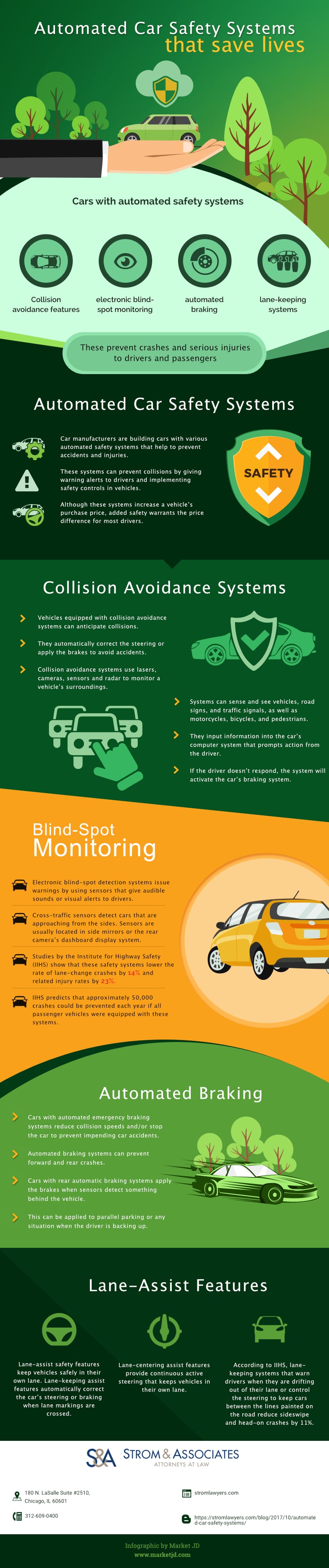
Cars with automated safety systems like collision avoidance features, electronic blind-spot monitoring, automated braking, and lane-keeping systems prevent crashes and serious injuries to drivers and passengers.
Automated Car Safety Systems
Car manufacturers are building cars with various automated safety systems that help to prevent accidents and injuries. These systems can prevent collisions by giving warning alerts to drivers and implementing safety controls in vehicles. Although these systems increase a vehicle's purchase price, added safety warrants the price difference for most drivers.
(Article continues below Infographic)
______
Collision Avoidance
Vehicles equipped with collision avoidance systems can anticipate collisions. They automatically correct the steering or apply the brakes to avoid accidents seen by a personal injury lawyer. Collision avoidance systems use lasers, cameras, sensors and radar to monitor a vehicle's surroundings. Systems can sense and see vehicles, road signs, and traffic signals, as well as motorcycles, bicycles, and pedestrians. They input information into the car's computer system that prompts action from the driver. If the driver doesn’t respond, the system will activate the car's braking system.
Blind-Spot Monitoring
Electronic blind-spot detection systems issue warnings by using sensors that give audible sounds or visual alerts to drivers. Cross-traffic sensors detect cars that are approaching from the sides. Sensors are usually located in side mirrors or the rear camera's dashboard display system. Studies by the Institute for Highway Safety (IIHS) show that these safety systems lower the rate of lane-change crashes by 14 percent and related injuries rates by 23 percent. IIHS predicts that approximately 50,000 crashes could be prevented each year if all passenger vehicles were equipped with these systems.
Automated Braking
Cars with automated emergency braking systems reduce collision speeds and/or stop the car to prevent impending car accidents. Automated braking systems can prevent forward and rear crashes. Cars with rear automatic braking systems apply the brakes when sensors detect something behind the vehicle. This can be applied to parallel parking or any situation when the driver is backing up.
Lane-Assist Features
Lane-assist safety features keep vehicles safely in their own lane. Lane-keeping assist features automatically correct the car's steering or braking when lane markings are crossed. Lane-centering assist features provide continuous active steering that keeps vehicles in their own lane. According to IIHS, lane-keeping systems that warn drivers when they are drifting out of their lane or control the steering to keep cars between the lines painted on the road reduce sideswipe and head-on crashes by 11 percent.
Call: (312) 609-0400
or fill out the Contact Form
About the Author

On January 1st, a new Illinois law went into effect. This law was designed to crack down on rogue tow truck operators and protect drivers during some of their most vulnerable moments—right after an accident. For years, Illinois drivers have reported alarming stories: tow trucks arriving within minutes of a crash, vehicles being hauled away […]
The holidays are one of the busiest—and most stressful—travel seasons of the year. Whether you’re heading out for a long road trip or flying to visit family, a little preparation can go a long way in preventing accidents, protecting your home, and keeping your loved ones safe. As personal injury attorneys, we see firsthand how […]

Keep Halloween Fun, and Stay Safe Doing It Halloween should be full of costumes, laughter, and candy — not preventable injuries. Whether you’re out trick-or-treating, driving through your neighborhood, or welcoming visitors to your home, a little extra care goes a long way in keeping everyone safe. 🎃 Trick-or-Treating Tips Add reflective tape to costumes […]