


.svg)
 Motor Vehicle Accidents

The Nursing Home Care Act was passed to bring state oversight to the disparate group of nursing home care facilities throughout Illinois. Before the Act’s passing, Illinois experienced a rash of headline-dominating nursing home abuse incidents.

The Illinois Department of Public Health (IPDH) released the results of a study conducted pursuant to the Nursing Home Care Act (Care Act) which culminated in a list of nursing home facilities which violated the standards enumerated in the Care Act. The Care Act was passed to comprehensively regulate nursing homes after a series of high-profile incidents put pressure on the Legislature.

Developmentally disabled adults who reside in group homes throughout the nation are often easy prey for physical, psychological and sexual abuse, and those who live in Illinois are no exception. A recent investigation by the Chicago Tribune uncovered a botched system in the state, revealing numerous incidents of neglect, abuse, death, and secrecy.

Rates of nursing home abuse are increasing. According to several studies, the government, private industry, and non-profit organizations are insufficiently responding to these rising trends. There are several causes for the increase in nursing home abuse rates. First, the elderly population is set to expand as Baby Boomers continue to retire rapidly.

Kenneth Allen and Olunfunmibi Ogunyipe were social workers working for the Bria of River Oaks Nursing Home. Last year, the two former employees filed a lawsuit in the Circuit Court of Cook County alleging that they were terminated by the nursing home for refusing to falsify and fabricate residents’ medical records to conceal abuse suffered by residents at the home.

Elder financial abuse costs seniors roughly $36.5 billion dollars a year. Financial abuse of seniors in nursing homes can include theft of personal property, forced withdrawals and deposits of funds, or the coerced transfer of titles and deeds to nursing home staff.

Nursing home providers who do not properly supervise residents place elderly patients at risk of serious injury, sexual assault, and fatal overdoses. State and federal laws establish the minimum number of hours an operator must provide nursing home residents with services.

Nursing homes exist in a still-developing area of law that sometimes inconsistently applies liability rules. Nursing homes, if they are healthcare providers, are required to carry two insurance policies: professional and general. Each policy will have different requirements, coverage, and liability rules which can profoundly affect the way an injured resident’s claim is treated.
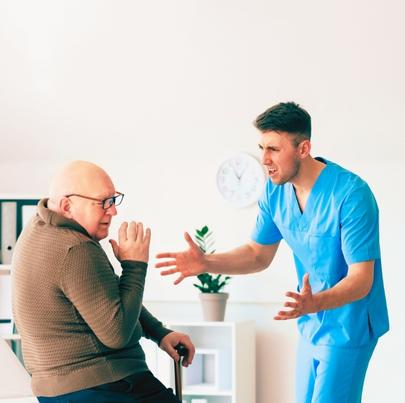
While research has shown that one out of every ten elderly people suffers from abuse, only one case out of every 7,700 emergency room visits by elderly people results in a diagnosis of elder abuse, pointing to the fact that many cases are not being diagnosed and reported.

Some of the most vulnerable members of society are being sexually abused in nursing homes throughout the country, and Illinois is not immune to these immoral crimes. Between 2007 and 2010 alone, an alarming 86 incidents involving some type of sexual abuse in nursing homes were reported in Chicago.