


.svg)
 Motor Vehicle Accidents
Is a Co-Bot Working Beside You?
Call: (312) 609-0400
or fill out the Contact Form
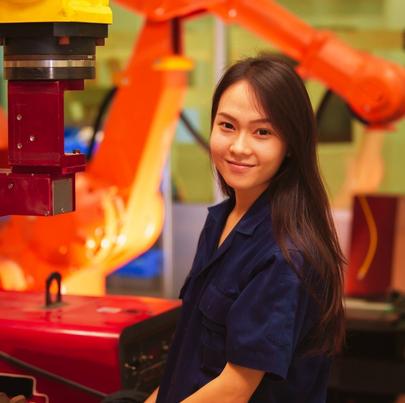
Co-bots are filling a niche in industrial manufacturing, but they often put human workers at higher risks for injuries.
Is the Workplace Ready for Co-Bots?
Over the past few years, many manufacturing industries have added caged robots to their workforce to expedite production. Recently, many industries including hospitals, agricultural farms, and supermarket have introduced collaborative robots (co-bots) that can work alongside humans performing a variety of tasks.
Although co-bots are a novel innovation, co-bots in the workplace raise safety concerns. Industrial robots were not designed to interact with humans for a number of good reasons. They were designed to perform precise or dangerous tasks like lifting heavy objects, performing high-intensity welding, and working with corrosive chemicals that created dangers for human workers.
In 2015, a German worker at a Volkswagen factory in Frankfurt was killed by a robot. The 22-year-old production worker was grabbed by a robot that mistook him for a car part. The robot grabbed the worker and threw him against a large metal plate causing severe injuries. The worker died of his injuries. According to the accident report, the worker was inside the robot cage working with a team installing the robot when the injury occurred. A Volkswagen spokesperson stated human error was to blame for the incident, not a problem with the robot.
A recent MIT study showed that co-bots increased production and reduced idle time by human workers by 85 percent. Co-bots were used in a South Carolina BMW factory to perform repetitive tasks like applying protective layers to the inside of car doors. The study showed that the co-bots removed the risk of repetitive stress injuries for human workers without posing any additional risk on the assembly line.
Co-Bot Safety
Advocates of co-bots in the workplace say these machines are not meant to replace large industrial robots that need to be in a cage. They are smaller and more adaptable for work tasks that assist human labor. They still require proper training in automated tasks that require specific skills.
Currently, many highly specialized surgical tasks in hospitals around the country are performed by co-bots. They are getting tested for assembling auto parts, installing computer components, and grilling and flipping burgers in busy restaurant chains. Co-bot safety in the workplace is still under review, but it's likely that co-bots will show up more frequently in U.S. industries in the near future.
Call: (312) 609-0400
or fill out the Contact Form
About the Author


In recent years, courts have overturned hundreds of criminal convictions in Chicago after uncovering patterns of police misconduct that undermined the integrity of investigations and prosecutions. Many of these cases involve allegations of improper tactics by former Chicago police officers, including former CPD Commander Jon Burge, former Sgt. Ronald Watts, and former Detective Reynaldo Guevara. […]
On January 1st, a new Illinois law went into effect. This law was designed to crack down on rogue tow truck operators and protect drivers during some of their most vulnerable moments—right after an accident. For years, Illinois drivers have reported alarming stories: tow trucks arriving within minutes of a crash, vehicles being hauled away […]
The holidays are one of the busiest—and most stressful—travel seasons of the year. Whether you’re heading out for a long road trip or flying to visit family, a little preparation can go a long way in preventing accidents, protecting your home, and keeping your loved ones safe. As personal injury attorneys, we see firsthand how […]