


.svg)
 Motor Vehicle Accidents
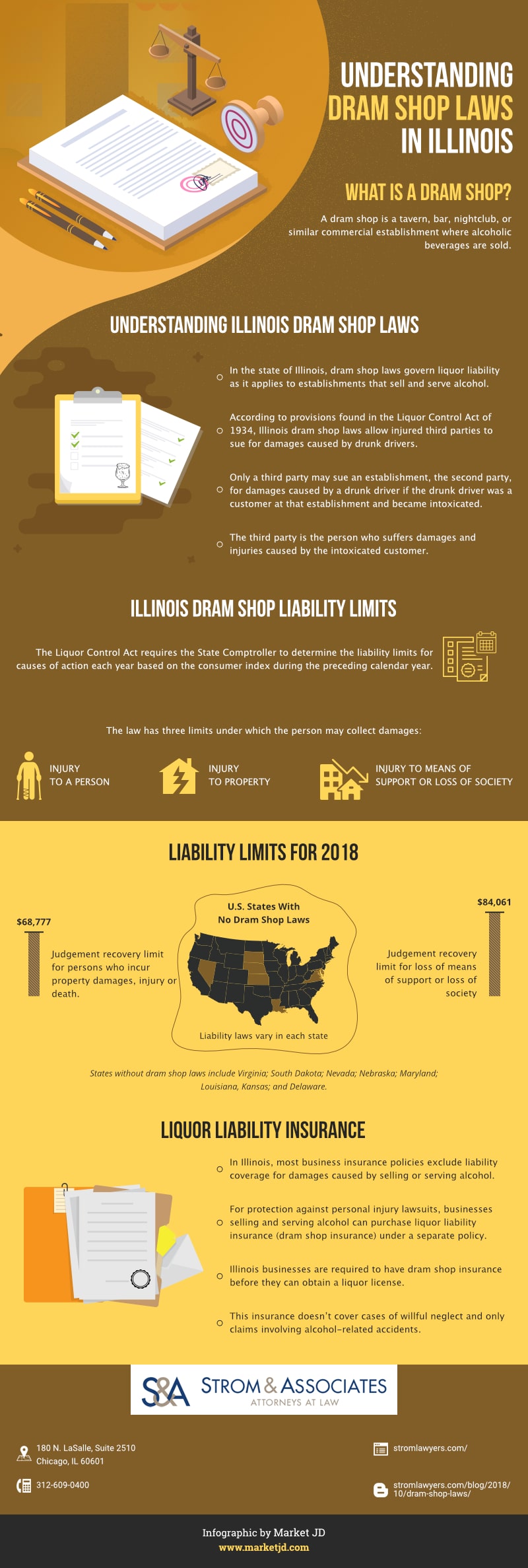
Understanding Dram Shop Laws in Illinois [infographic]

Call: (312) 609-0400
or fill out the Contact Form
What Is Illinois Dram Shop Law?
Illinois dram shop law may allow an injured person to bring a claim against a bar, restaurant, liquor store, tavern, nightclub, or other commercial alcohol seller when alcohol sold by that business contributed to a person’s intoxication and that intoxicated person caused injuries, death, property damage, or loss of support. Dram shop claims are separate from claims against the intoxicated person who caused the harm.
Dram shop cases often arise after drunk driving crashes, assaults, falls, or other alcohol-related injuries. These claims can be complicated because the injured person may need to prove where alcohol was sold, how the alcohol contributed to intoxication, how the intoxication caused the injury, and whether the claim was filed within Illinois’ shorter dram shop deadline. A Chicago personal injury lawyer can help investigate whether a dram shop claim may be available.
| Issue | What It Means in Illinois |
|---|---|
| Who may be liable? | A commercial alcohol seller, such as a bar, restaurant, tavern, liquor store, nightclub, or similar business. |
| Who may bring a claim? | A person injured by an intoxicated person, or certain family members seeking damages after injury or death. |
| Common accident types | Drunk driving crashes, pedestrian accidents, assaults, falls, and other alcohol-related injuries. |
| What must be proven? | The business sold alcohol, the alcohol contributed to intoxication, and the intoxication caused or contributed to the injury. |
| Social hosts | Illinois dram shop claims generally apply to commercial sellers of alcohol, not ordinary social hosts at private gatherings. |
| Deadline | Dram shop claims have a shorter deadline than many ordinary personal injury claims, so quick legal review is important. |
Understanding Dram Shop Laws
Dram shops are commercial establishments that sell or serve alcohol, including bars, pubs, restaurants, liquor stores, taverns, and nightclubs. In alcohol-related crash cases, injured people often ask whether a bar can be held liable for a drunk driver. In Illinois, the answer may be yes if the alcohol sold by the business contributed to the intoxication that caused the injury.
If you have been injured by a person who has consumed alcohol, you may be able to pursue a claim for damages against the person who injured you with help from a Chicago dram shop liability attorney. Illinois dram shop laws allow an injured person to pursue damages against the patron who served alcohol to the intoxicated person who then caused the injury.
These laws exist because alcohol-related accidents can cause catastrophic injuries, especially when intoxicated people get behind the wheel. As discussed in the firm’s related article, no amount of alcohol is safe when driving.
In most states, dram shop laws apply to vendors who did wrong by serving underage persons or selling alcohol to a visibly intoxicated person. In Illinois, however, dram shop laws permit you to hold the vendors liable regardless of whether there was any wrongdoing on their part.
So, if a person goes to a bar, consumes alcohol, and then goes driving and has an accident with you, who are entitled to claim damages directly against the person who caused the accident. Under Illinois dram shop laws, you will also be entitled to claim against the bar that sold the alcohol.
Dram shop laws apply to vendors who provide alcohol commercially. They do not apply to hosts who provide alcohol at social events such as parties or social gatherings.
Under dram shop laws in Illinois, third parties can sue establishments that sell and serve liquor for damages caused by drunk driving accidents, if the driver was served alcohol at that establishment.
______
Understanding Illinois Dram Shop Laws
A dram shop is a tavern, bar, nightclub, or similar commercial establishment where alcoholic beverages are sold. In the state of Illinois, dram shop laws govern liquor liability as it applies to establishments that sell and serve alcohol. Illinois law states that only a third party may sue an establishment, the second party, for damages caused by a drunk driver if the drunk driver was a customer at that establishment and became intoxicated. The third party is the person who suffers damages and injuries caused by the intoxicated customer.
According to provisions found in the Liquor Control Act of 1934, Illinois dram shop laws allow injured third parties to sue for damages caused by drunk drivers. The Liquor Control Act requires the State Comptroller to determine the liability limits for causes of action each year based on the consumer index during the preceding calendar year. The law has three limits under which the person may collect damages: injury to a person; injury to property; and injury to means of support or loss of society.
(Article continues below infographic)
Illinois Dram Shop Liability Limits for 2018:
- For causes of action that involve persons who incur property damages, injuries, or death, the judgment recovery shall not exceed $68,777.44 for each person.
- For causes of action that involve either loss of means of support or loss of society resulting from the injury or death of any person, the judgment recovery shall not exceed $84,061.32.
Dram shop laws make businesses that sell and serve alcoholic beverages to customers liable in cases where intoxicated customers cause harm to another person/persons after they leave that business. Currently, dram shop laws exist in 43 states, but liability laws vary in each state. States without dram shop laws include Virginia; South Dakota; Nevada; Nebraska; Maryland; Louisiana, Kansas; and Delaware.
In Illinois, most business insurance policies exclude liability coverage for damages caused by selling or serving alcohol. For protection against personal injury lawsuits, businesses that sell and serve alcohol can purchase liquor liability insurance (dram shop insurance) under a separate policy. Illinois businesses are required to have dram shop insurance before they can obtain a liquor license. This insurance doesn't cover cases of willful neglect, only claims involving alcohol-related accidents.
Liability Limits
Illinois law permits you to claim damages under dram shop laws for two situations. You may seek dram shop damages for your personal injury as the victim or loss of companionship. You can also seek compensation as support from the victim’s injury or death, if the victim was a family member of yours. Illinois sets a cap on the vendor’s liability, which it adjusts regularly. Currently, the liability limits in Illinois permit you to claim up to $77,787.30 for injury, death, or property damage for each person suffering damages. For loss of support or companionship resulting from injury or death, the cap is $95,073.37.
Proving Fault in a Dram Shop Case
If you want to file a personal injury case with a dram shop attorney in Chicago, you will need to prove the following four elements of fault:
- Proof that the vendor sold alcohol to the intoxicated individual. This can be done using evidence such as receipts either from the bar, restaurant or credit cards, tabs, video footage or witness statements.
- Causation. This means that the intoxicated individual then went on to cause injuries to a third person. It can be established using evidence such as witness statements, police reports, surveillance, etc.
- The was proximate cause between the sale of alcohol and the intoxication. This requires you to show that the vendors selling alcohol led to the individual being intoxicated at the time of the accident. Legally, this requires the intoxicated individual’s blood alcohol content to be more than 0.08.
- The intoxication was the cause of the injuries. The injured person must have suffered injuries or damages because of the intoxication. In Illinois, the law requires that intoxication is the cause of one-third of the injuries suffered.
Who Can Be Held Liable in an Alcohol-Related Accident?
Quick Answer: Depending on the facts, an injured person may have claims against the intoxicated person, a commercial alcohol seller, another negligent driver, a business, an insurance company, or multiple parties involved in the accident.
A dram shop claim may be only one part of an alcohol-related injury case. In a drunk driving crash, for example, the injured person may have a claim against the impaired driver and may also investigate whether a bar, restaurant, or liquor store contributed to the intoxication.
Potentially responsible parties may include:
- The intoxicated person: The person who caused the crash, assault, fall, or other injury.
- A commercial alcohol seller: A bar, restaurant, tavern, liquor store, nightclub, or other business that sold alcohol.
- Another negligent driver: A separate driver who also contributed to the crash.
- An uninsured or underinsured driver: A driver with no insurance or too little insurance to cover the damages.
- A business or property owner: In some cases, negligent security or premises conditions may also be involved.
If the alcohol-related injury involved a crash, the claim may overlap with a Chicago car accident case, an uninsured or underinsured motorist claim, or a broader personal injury claim.
Do You Have a Dram Shop Case?
If you were injured by an intoxicated person in Chicago or elsewhere in Illinois, contact Strom Yen Injury Attorneys to discuss whether you may have a claim against the intoxicated person, a commercial alcohol seller, an insurance company, or another responsible party.

Every case is different and depends on the facts. A Chicago car accident lawyer can help collect evidence, preserve surveillance footage, obtain police reports, contact witnesses, review insurance coverage, and determine whether a dram shop claim should be pursued alongside a claim against the intoxicated driver.
You will want to provide evidence showing that the person was intoxicated, but the vendor continued serving him or her alcohol. Alternatively, the person was likely to become intoxicated due to the amount of alcohol served, but served him or her anyway. Dram shop laws apply to vendors selling alcohol to minors, so the vendor will be liable for selling without requesting proof of age. Finally, if a vendor sells alcohol to the person after normal closing hours.
Statute of Limitations
A statute of limitations sets a time limit within which you can start legal proceedings. If the time limit has passed in terms of the statute of limitations, you are not able to bring your claim. The statute of limitations for a personal injury case in Illinois is two years from the time of the accident. With dram shop laws, however, that statute of limitations is shorter at one year. So, if you suffered damages from an accident within the past year, you may still have a claim.
Defenses
There may be certain defenses on which a defendant can rely to refute a dram shop claim.
One of these is complicity, meaning that the injured person was complicit in, or contributed to, the intoxication of the person. So, if you went to a bar with a friend, and brought your friend some alcohol before leaving, your friend could claim the defense of complicity. This applies if the injured person actively participated in and encouraged the intoxicated person to consume alcohol.
In cases involving a minor, a vendor can defend itself by proving that it relied on proof of age provided by the minor. If they properly checked proof of age, ad reasonably believed such proof that the minor was an adult, they can use this as a defense.
Finally, a vendor can rely on proof that it was not negligent. This may be the case where the vendor encouraged customers to use taxi or ride-share services rather than driving while intoxicated, or encouraged patrons to appoint a designated driver.
If you have suffered damages in an accident from an intoxicated person within the last year, and do not believe that the vendor has any of the defenses mentioned, you may want to contact a Chicago dram shop liability lawyer. A lawyer will help you gather evidence, establish your case, and advise you on the merits of your claim. They will help you with understanding dram shop laws in Illinois and navigating the legal processes for claiming compensation.
Illinois Dram Shop Law FAQs
What is a dram shop claim in Illinois?
A dram shop claim is a civil claim against a commercial alcohol seller when alcohol sold by that business contributed to a person’s intoxication and the intoxicated person caused injuries, death, property damage, or loss of support.
Can a bar be liable for a drunk driving accident in Illinois?
Yes. A bar, restaurant, tavern, nightclub, liquor store, or other commercial alcohol seller may be liable if alcohol it sold contributed to the intoxication of a person who later caused a drunk driving accident or other injury.
Does Illinois dram shop law apply to private parties?
Illinois dram shop law generally applies to commercial sellers of alcohol, not ordinary social hosts who serve alcohol at private parties or social gatherings. The facts of the case should still be reviewed carefully.
What evidence helps prove a dram shop case?
Helpful evidence may include receipts, bar tabs, credit card records, surveillance video, witness statements, police reports, toxicology records, phone records, and proof showing that intoxication caused or contributed to the injury.
How long do you have to file a dram shop claim in Illinois?
Illinois dram shop claims may have a shorter deadline than ordinary personal injury claims. Many dram shop claims must be filed within one year, so injured people should act quickly to preserve evidence and evaluate their legal options.
What damages are available in an Illinois dram shop claim?
Damages may include compensation for injury, death, property damage, loss of support, or loss of society, subject to applicable statutory limits. Other claims against the intoxicated person or insurance policies may also be available.
Call: (312) 609-0400
or fill out the Contact Form

Chicago’s 2026 Election: What You Need to Know Before November 3 Election Day is right around the corner! On Tuesday, November 3, 2026, Chicagoans will have an opportunity to weigh in on decisions affecting our city, state, and country. From public education and community safety to transportation, infrastructure, and public services, the people elected to […]

New Illinois E-Bike and Scooter Laws are coming in 2027 What Riders, Parents and Drivers Need to Know to Stay Safe and Compliant Electric scooters and e-bikes have quickly become part of everyday transportation in Chicago and throughout Illinois. They are convenient, relatively inexpensive and give people another way to get around without a car. […]

For many families, the school bus is part of the daily routine. Parents send their children out the door each morning trusting that the driver behind the wheel has been properly licensed, trained, screened, and medically cleared to safely transport students. Illinois has specific requirements designed to help make sure that happens. Unfortunately, a tragic […]